19.10.2026
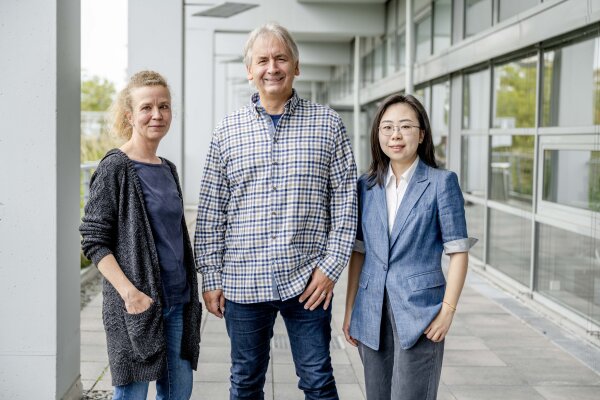
Enzymes that are particularly efficient at producing hydrogen have to capture protons from the solvent extremely quickly in order to do so. Researchers in Bochum have discovered how they accomplish this.
The team around Duan and Professor Thomas Happe was able to demonstrate that the binding of zinc and other metal ions blocks very specific amino acids, namely two histidines on the surface of [FeFe]-hydrogenases. Histidines in enzymes are known for binding protons, but their role in [FeFe]-hydrogenases was previously unexplored. When the researchers replaced one of these histidines with another amino acid, the biocatalyst remained highly active but became insensitive to zinc. However, when they replaced the other histidine, the [FeFe]-hydrogenase could only very slowly produce hydrogen.

Copyright © pbt 2026
Last update: Oct 19, 2026